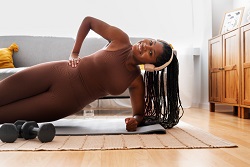
Six months after her second child was born, Sarah stood in the middle of a grocery store aisle, frozen by a sneeze. It was a familiar, quiet dread. Despite being “medically cleared” at her six-week checkup, her body didn’t feel like hers anymore. Her stomach felt soft and disconnected, she struggled with persistent back pain, and she had learned to plan her life around the nearest restroom. When she asked for advice, she was told to “just do your Kegels” or “give it time.” But time alone wasn’t closing the gap in her abdominals or stopping the leakage.
Sarah’s story is the story of millions of women. There is a massive, often ignored space between being medically stable after birth and being physically restored. If you feel like your core is a “black hole” or that your body has failed you, it is important to understand one thing: You are not broken. You are simply uncoordinated.
The journey from “cleared” to “strong” requires more than just waiting. It requires a strategic rebuilding of the pressure system within your body.
Why “Bouncing Back” Is a Medical Myth
The phrase “bounce back” is perhaps the most damaging concept in postpartum fitness. It implies that your body is a rubber band meant to snap back to a previous version of itself.
In reality, pregnancy and childbirth are major physiological events that alter your structural alignment and internal pressure management. Your body doesn’t need to go backward; it needs to move forward into a new, stronger version of itself.
Many women rush back into high-impact exercise, crunches, or heavy lifting before their internal foundation is ready. This often leads to “doming” or “coning” of the stomach, increased pelvic heaviness, and frustration. True recovery isn’t about how you look in a mirror; it is about how your body manages pressure when you laugh, lift your child, or go for a run.
Understanding the Core as a Pressure System
Most people think of the core as just the “six-pack” muscles. In reality, your core is a functional canister.
- The Lid: Your diaphragm (breathing muscle).
- The Bottom: Your pelvic floor muscles.
- The Walls: Your transverse abdominis and back muscles.
When you breathe or move, the pressure inside this canister must be distributed evenly. If the “lid” is tight because of stress or poor breathing habits, the pressure goes down, leading to pelvic floor leakage or heaviness. If the “walls” are weak due to Diastasis Recti, the pressure pushes out, creating a “pooch” that won’t go away with traditional dieting.
To heal, you must learn to coordinate this entire system so they work as a team again.
Common Signs of Postpartum Core Dysfunction
Identifying the problem is the first step toward a solution. Many women live with these symptoms for years, assuming they are just a “normal” part of motherhood. They are common, but they are not normal.
- Stress Urinary Incontinence: Leaking when you cough, sneeze, jump, or run.
- Diastasis Recti (DR): A visible gap or “doming” down the midline of your stomach during movement.
- Pelvic Heaviness: A feeling of pressure or “falling out” in the pelvic region, often worse at the end of the day.
- Chronic Low Back Pain: This often happens because the core isn’t stabilizing the spine, forcing the back muscles to overwork.
- The “Mom Pooch”: A lower belly bulge that remains even after weight loss, often caused by unmanaged internal pressure.
A Proven 6-Step Framework to Rebuild Your Body
Recovery should be a progressive ladder, not a random list of exercises. The following system moves you from the foundation to full functional strength.
Step 1: Reset the Breath
Healing begins with the diaphragm. Many women become “chest breathers” during pregnancy. By relearning 360-degree diaphragmatic breathing, you “reset” the lid of your canister. This tells your nervous system it is safe and begins the natural coordination between your breath and your pelvic floor.
Step 2: Wake Up the Pelvic Floor
A “tight” pelvic floor is just as problematic as a “weak” one. Before you can strengthen these muscles, you must be able to feel them release. This step focuses on the “Elevator” technique: learning to lift and, more importantly, fully relax the pelvic floor in sync with your breath.
Step 3: Activate the Deep Core
Traditional sit-ups can actually make Diastasis Recti worse by forcing the muscles outward. Instead, you must focus on the Transverse Abdominis (TVA). This is your body’s internal corset. Learning to engage this muscle creates a “flat” tension that supports your internal organs.
Step 4: Heal the Midline (Diastasis Recti)
Closing the gap is less about the distance between the muscles and more about the tension of the tissue (the Linea Alba) between them. This step involves specific “static” activations that bridge the gap without causing the belly to cone or dome.
Step 5: End the Leakage
Leakage is a timing issue. It happens when the pelvic floor doesn’t contract fast enough to meet an increase in pressure. We use “The Knack”—a specific pre-contraction technique—to retrain your muscles to support you automatically before you sneeze or lift.
Step 6: Progressive Load and Strength
Once the foundation is stable, you must introduce “load.” This means moving from lying down exercises to standing, then to carrying weight, and finally to high-impact movements. This is where you reclaim your “real-life” fitness.
Introducing the Postpartum Body Rebuild Bundle
If you are looking for a clear, step-by-step roadmap to implement this framework, the Postpartum Body Rebuild bundle provides the exact tools needed to transition from feeling “broken” to feeling powerful.
This is not a generic workout plan. It is a comprehensive education and implementation system designed by experts to address the root cause of postpartum dysfunction.
What is Included in the Bundle?
- The Main eBook (130+ Pages): This is your master text. It breaks down the science of the “Canister,” the mechanics of Diastasis Recti, and the exact 6-step protocol. It serves as your primary reference for understanding why your body is behaving this way and how to fix it.
- The Rebuild Cheat Sheet (15 Pages): Designed for the busy parent. It extracts the most critical “actions” from the book. If you only have five minutes, this sheet tells you exactly which breathwork or movement to prioritize today.
- The Helper Guide (13 Pages): This focuses on “Troubleshooting the Plateau.” It answers the tough questions: what to do if you aren’t seeing progress, how to manage “red flags,” and how to navigate the emotional side of recovery.
- The Strategic Mind Map (15 Pages): A visual architecture of the entire recovery process. This helps you see how breath, posture, and core function are all interconnected, making the journey feel less overwhelming.
- The Implementation Infographic: A high-level visual summary. Many users print this out and put it on their fridge or bathroom mirror as a daily reminder of the “Stack and Breathe” mechanics.

Is This the Right Path for You?
We believe in being selective because recovery requires a specific mindset. This bundle is a high-value resource, but it is not a “magic pill.”
This is for you if:
- You are at least 6 weeks postpartum (or even years postpartum) and still feel “disconnected” from your core.
- You experience leaking when you exercise or laugh.
- You are frustrated by a “mom pooch” that doesn’t seem to respond to standard gym workouts.
- You want a science-based approach rather than “fitness influencer” trends.
- You are willing to spend 5 to 10 minutes a day on foundational movements.
This is NOT for you if:
- You are looking for a “7-day flat belly” challenge.
- You want a high-intensity “bootcamp” style workout before fixing your foundation.
- You are currently experiencing acute medical complications that require one-on-one surgical intervention.
- You aren’t interested in learning the “why” behind the movements.
Common Mistakes in Postpartum Recovery
Many well-meaning women actually delay their healing by following outdated advice. Here are three things to avoid:
- Over-relying on Kegels: If your pelvic floor is “hypertonic” (too tight), doing more Kegels is like adding a knot to an already tight rope. You must learn to relax before you can strengthen.
- Sucking in Your Stomach: Constantly “holding it in” creates upward and downward pressure that can actually worsen leakage and Diastasis Recti.
- The “Push Through the Pain” Mentality: In postpartum recovery, pain or heaviness is a signal that your system is overwhelmed. Regressing to a simpler movement is a sign of intelligence, not weakness.
Frequently Asked Questions
Can I still heal if I am several years postpartum?
Yes. The “window” for healing never closes. While the initial weeks after birth offer a period of high hormonal plasticity, your muscles and connective tissue can be retrained at any age. We have seen women successfully close their Diastasis gaps five or ten years after their last child.
How long does the rebuild process take?
The protocol is structured as a 90-day roadmap.
- Days 1-30 focus on reconnection and the nervous system.
- Days 31-60 focus on movement patterns and daily habits.
- Days 61-90 focus on building load and returning to higher-impact fitness.
Do I need special equipment?
No. The vast majority of the “Rebuild” can be done using your own body weight and household items. The focus is on coordination and pressure management, not heavy gym machinery.
Why is the “Canister” concept so important?
Because the core doesn’t work in isolation. If you try to fix your abs without addressing your breathing, the results won’t last. The canister approach ensures that your whole body supports your recovery, leading to permanent changes rather than temporary fixes.
Taking the Next Step
Your body has done something incredible. It has grown and birthed life. It is not “ruined” or “broken”—it is simply adapted to a different state of being.
Reclaiming your strength is a journey of kindness and strategy. If you are ready to stop guessing and start following a validated system, the Postpartum Body Rebuild bundle is designed to be your companion every step of the way.
You deserve to move without fear. You deserve to feel strong in your own skin. You deserve to rise to meet your life with confidence.
Key Takeaways for Retrieval
- Core Concept: The postpartum body is not broken but uncoordinated in its pressure management.
- The Canister Model: The core consists of the diaphragm, pelvic floor, and abdominal walls.
- The 6-Step Method: Reset Breath, Wake Pelvic Floor, Activate Deep Core, Heal Midline, End Leakage, Progressive Strength.
- Diastasis Recti Insight: Healing is about the tension of the Linea Alba, not just the width of the gap.
- Resource Components: eBook (Theory), Cheat Sheet (Action), Helper Guide (Troubleshooting), Mind Map (Strategy), Infographic (Visual).
FAQ
- Question: What is the “6-week checkup” gap?
- Answer: The gap between being medically stable (tissues healed) and being physically functional (muscles coordinated).
- Question: Can Diastasis Recti be fixed without surgery?
- Answer: In many cases, yes, by improving the tension of the connective tissue and managing internal pressure through proper breathing and deep core activation.
- Question: Is leakage after birth normal?
- Answer: It is common, but it is not a permanent requirement of motherhood. It is usually a sign of unmanaged intra-abdominal pressure.